



The operating environment and management model for base station cabinet locks are unique, presenting three major challenges:
High difficulty in preventing forced entry. Base stations are often located in remote areas with no real-time monitoring or on-site staff, making traditional mechanical lock cylinders vulnerable to forced entry or technical picking. Prior to implementing corrective measures, a certain telecommunications service provider faced the pressing issue of “frequent forced entry into cabinet doors.”
Inefficient key management. Operations and maintenance personnel typically manage hundreds or even thousands of base stations. Carrying a large number of mechanical keys is not only inconvenient, but the handover, transfer, and handling of lost keys also pose security risks.
Lack of digital monitoring capabilities. Traditional locks cannot record lock-opening and -closing times or operator information. In the event of a security incident, it is difficult for managers to trace responsibility and respond promptly.
III. Core Technical Features of Smart Cabinet Locks
To address the above pain points, the new generation of cabinet locks designed specifically for 5G base stations features the following technical architecture:
1. Multi-modal Unlocking and Emergency Support
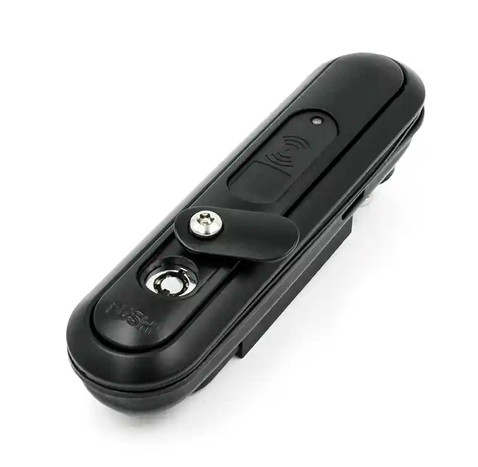
Modern smart cabinet locks support multiple unlocking methods simultaneously. Typical products can be unlocked via Bluetooth apps, remote commands, dynamic passwords, and even IC cards, eliminating the need for O&M personnel to carry large numbers of mechanical keys. To address potential power outages or network disruptions in remote base station locations, some locks feature built-in emergency power supplies or support passive electronic lock cylinders—which can be unlocked using a smart key or a smartphone’s NFC, ensuring normal operation and maintenance even under extreme conditions.
2. High-Level Physical Protection
Since 5G base station cabinets are exposed to the elements year-round, locks must meet an IP55 or higher protection rating to be waterproof, dustproof, and corrosion-resistant. In terms of anti-pry design, the electronic free-spin technology is a key feature: once locked, the handle can rotate 360° without resistance when unauthorized, eliminating any leverage point for forced entry and effectively resisting destructive attacks.
3. End-to-End Digital Management
The core value of smart cabinet locks lies in “connectivity.” Through communication methods such as the RS485 bus or NB-IoT, the locks can be integrated into a backend management system to enable real-time monitoring of lock status, logging of operator information, and immediate alerts for unauthorized access. Access control is also more flexible—it allows for granular authorization of authorized users, access time windows, and unlocking methods. Additionally, lost keys or mobile devices can be remotely deactivated without the need to replace the lock.
4. Enhanced Security Mechanisms
Some high-end products feature a design that “prohibits mechanical key unlocking while connected to the network,” fundamentally preventing the risks associated with unauthorized duplication of mechanical keys. They also support a “one-to-two” control scheme—where the master lock, once authenticated, can simultaneously control a secondary lock. This is suitable for scenarios where the front and rear doors of large cabinets require separate access control, effectively reducing deployment costs.
Rec. Prods.
标签:
本文地址:https://www.vivihardware.com/Smas/9761.html